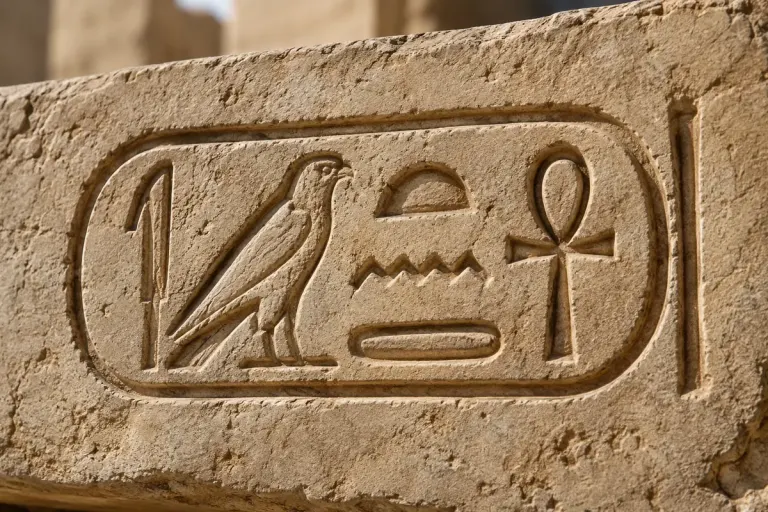
Objects & Beliefs
An Egyptian Cartouche Frames a Name Rather Than an Entire Sentence
Recognise a cartouche as a frame associated with a royal name, then use a museum record before attempting to identify its signs.

Explore what objects can tell us about ancient lives and beliefs, with room for uncertainty.
Recognise a cartouche as a frame associated with a royal name, then use a museum record before attempting to identify its signs.
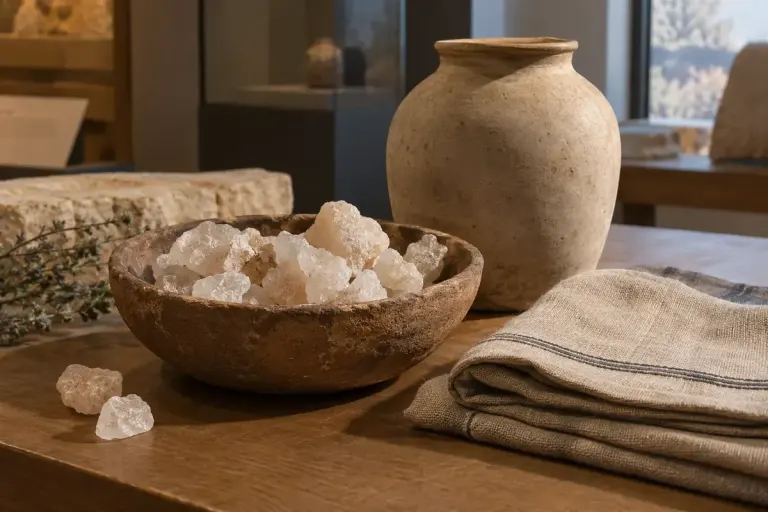
Explore natron through a small object from Tutankhamun’s embalming cache, separating its material role from the wider interpretation of a burial assemblage.
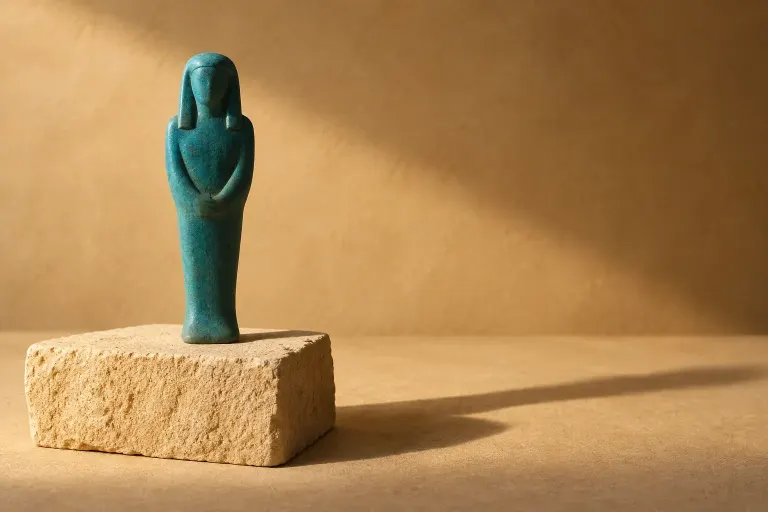
The miniature workers in Meketre’s bakery and brewery model become easier to follow when you look at the divisions of the building before counting…
Two carved wooden forms can describe a bodily action while also producing sound. The Met’s Egyptian clappers, object 89.4.1843, take the form of hands with…
The Met’s ivory mechanical dog is posed in a leap, but its movement is not only represented in carving. A lever beneath the chest operates the mouth, adding…
At first glance, a small faience baboon might seem to belong only to the world of animal imagery. In the Met’s object 17.194.2341, the figure is connected…
A small figure of a musician provides evidence of a represented performance, but it cannot play the music that once accompanied such imagery. That…
An Egyptian cat figure can be recognisable before its smaller details are visible. The Met’s record for one metal example draws attention to adornments that…