
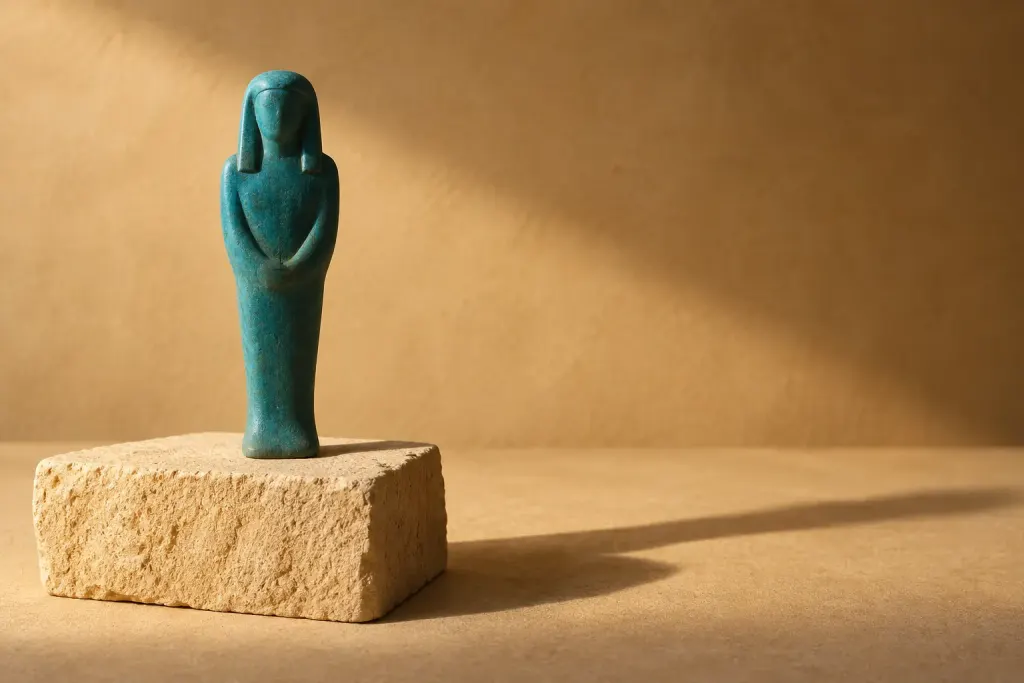
A small figure of a musician provides evidence of a represented performance, but it cannot play the music that once accompanied such imagery. That distinction is useful when looking at Egyptian musical objects.
Identify the kind of object
The Met’s Double-flute player, 41.6.7 is made of faience and stands six centimetres high. The record dates it approximately to 945–525 BCE and discusses its imagery in relation to other ritual objects and divine associations.
Keep the figurine’s material separate from the material of the instrument it depicts. A faience representation does not establish that the represented pipes themselves were made of faience.
Ask what the image can show
Look at posture, the arrangement of the represented instrument and any details the museum explains. Questions about tuning, melody or the exact sound require different kinds of evidence.
In your notebook, divide the entry into represented action and surviving object. This simple separation allows the figure to contribute to a discussion of music and ritual without being treated as a recording. Its small size can carry a rich image, while the silence of the surviving object remains part of the historical question.