
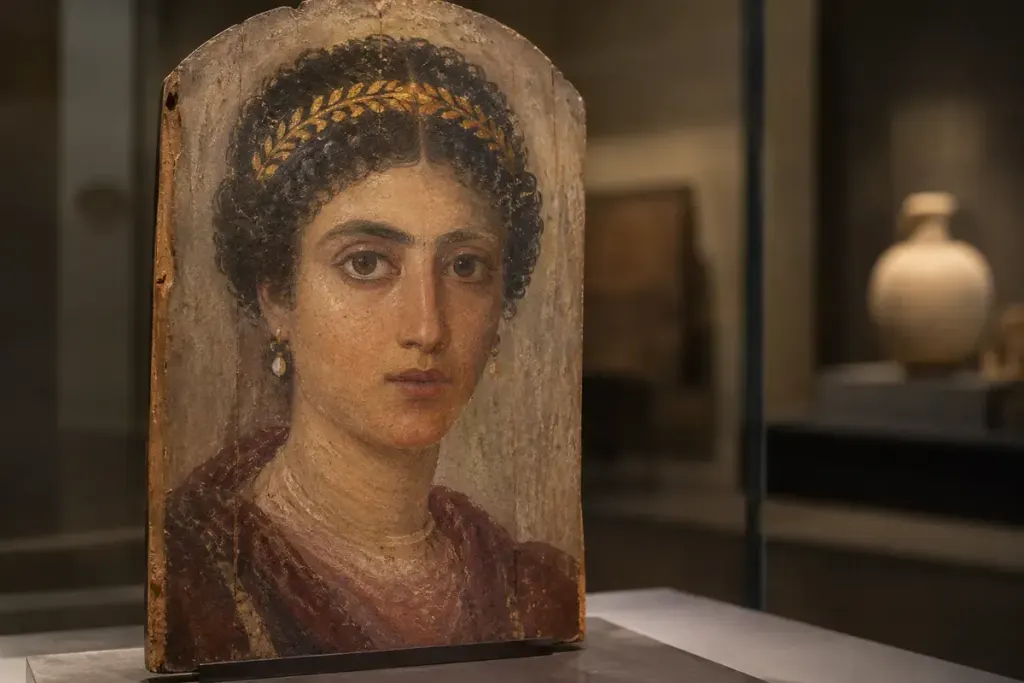
A face painted on a panel can feel immediately familiar. Its support and placement, however, belong to a particular object history. Mummy portraits from Roman Egypt deserve more than a quick comparison with modern portrait photography.
Read the medium before describing the technique
The Met’s Ancient Faces exhibition account discusses several techniques and supports, including encaustic and tempera on wooden panels and painting on linen. A single bright digital image does not establish which combination you are looking at.
For one record, copy the museum’s title, date range, medium and identifier. Then ask whether the portrait remains with a mummy or is presented separately. The Met’s mummy with an inserted portrait of a youth offers a specific example of a panel still described within a larger assemblage.
Separate likeness from biography
Describe visible features without inventing a personality or life story. Jewellery, hairstyle and clothing can prompt historical questions, but the image alone does not give you the sitter’s occupation, temperament or exact age at death.
Include the panel’s edges and surrounding materials when the museum image permits. Cropping tightly around the face can conceal the very evidence that distinguishes a painted support from a face-shaped mask. A useful viewing note connects the person represented, the material carrying the image and the catalogue’s account of how the object survives today.
AI-generated editorial illustration; not a documentary photograph.