Materials & Making
Six Slender Supports Change How We Look at an Egyptian Headrest
Look closely at a wooden Egyptian headrest in The Met collection, using its unusual supports to separate the object’s documented form from modern assumptions.

Look closely at a wooden Egyptian headrest in The Met collection, using its unusual supports to separate the object’s documented form from modern assumptions.
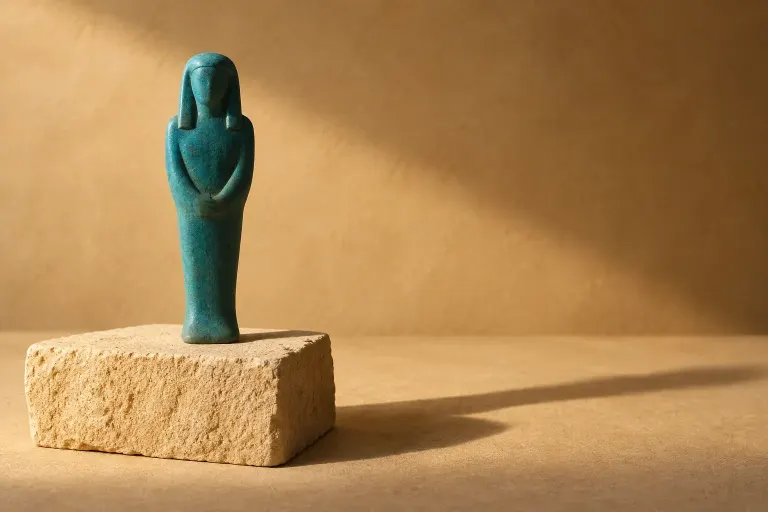
A canopic coffinette from Tutankhamun’s equipment shows why a small object should be understood alongside the larger arrangement that held it.
Read a reconstructed Egyptian gameboard by distinguishing surviving faience from modern additions, and keep those layers visible in your description.
Meketre’s model granary depicts storage alongside measuring and accounting. Look at how its figures divide the work before imagining a whole economy.
A fine linen textile with ancient repairs invites questions about use and care, while showing why condition should be read through the museum’s evidence.
A linen sheet from Tutankhamun’s embalming cache connects writing, material and archaeological interpretation without reducing the object to a famous name.
Use a modest linen sheet to practise reading material, dimensions and find context without assuming that every ancient textile tells the same story.
Explore an Egyptian scribal palette through its ink wells, reed storage and catalogue details, keeping the writing tool distinct from the written text.