Materials & Making
An Egyptian Harp’s Surviving Wood Is Only Part of Its Sounding Body
The Met’s arched harp, object 25.3.306a, b, preserves a wooden form whose musical operation involved other materials. The museum explains that its sound box…

The Met’s arched harp, object 25.3.306a, b, preserves a wooden form whose musical operation involved other materials. The museum explains that its sound box…
A brick mould is a tool for giving material a repeatable form. The Met’s wooden example, object 25.3.108, also has a recorded archaeological setting: a…
An image of a craftsperson can reveal more than the finished object being made. A depicted bow drill directs attention to the movement of hands, the…
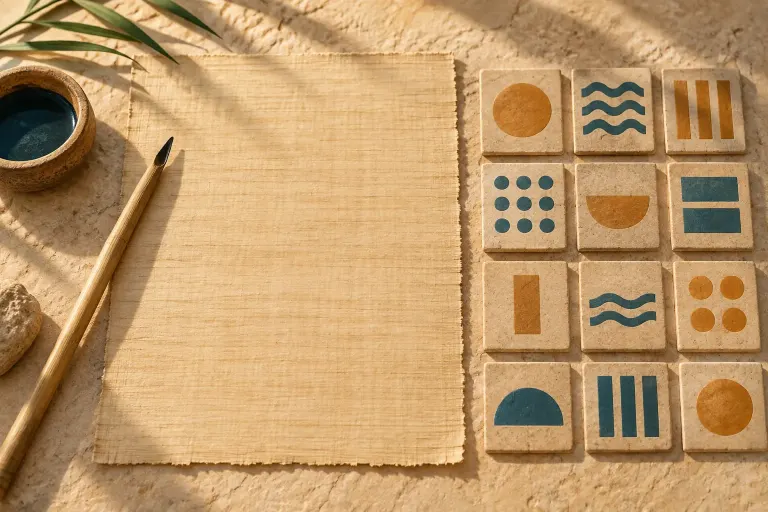
A board-game display naturally draws attention to its squares and playing pieces. The objects used to determine movement are easier to miss. The Met’s…
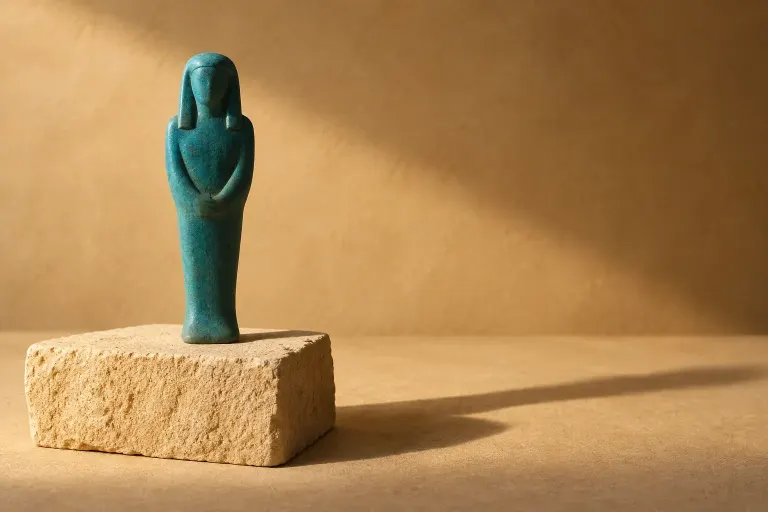
At first glance, a small faience baboon might seem to belong only to the world of animal imagery. In the Met’s object 17.194.2341, the figure is connected…
The Met’s silver strainer, object 07.228.184, is small enough that its working surface can be overlooked beside more imposing ancient objects. Its lower…
A small piece of flint can be easier to understand when you picture the larger tool it belonged to. The Met’s bifacial sickle insert, object 15.3.797, was a…
A small figure of a musician provides evidence of a represented performance, but it cannot play the music that once accompanied such imagery. That…