
A museum object can become easier to follow when we begin with a name rather than a broad category. “Canopic jar” tells us what kind of object we are reading about; the name Seniseneb gives us a more particular route through the record.
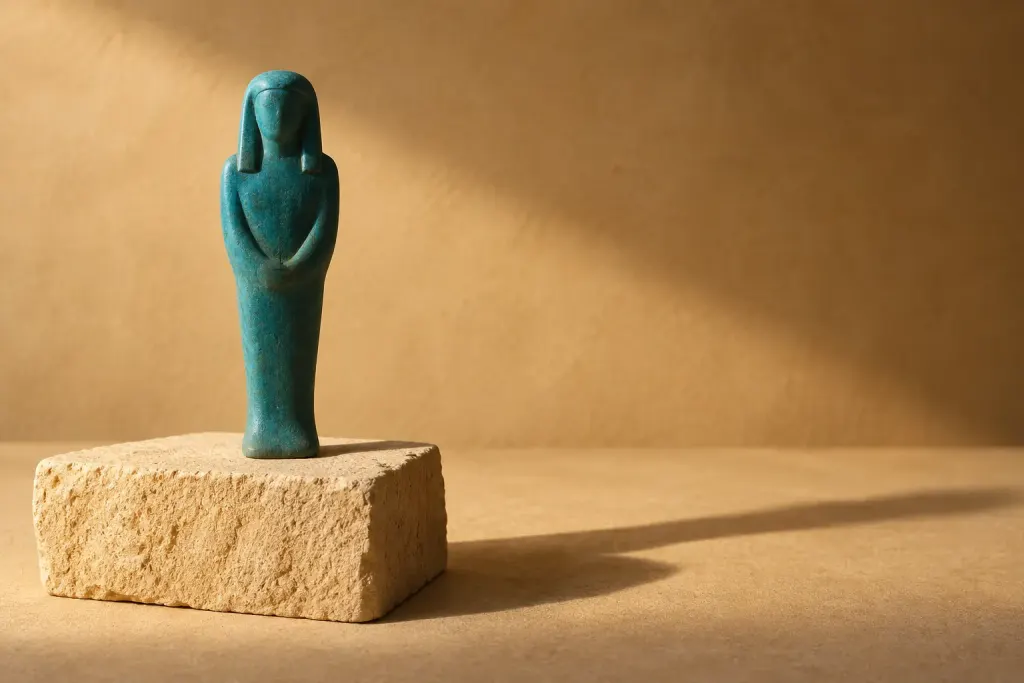
This short reading exercise uses The Met’s record for object 25.7.30a, b. The featured illustration is a general image of Egyptian material culture, not a photograph of this jar.
Keep the person and the catalogue number together
The museum dates the pottery-and-paint jar to approximately 1550–1300 BCE and identifies it with Dynasty 18. Its explanation says the inscription asks Isis and Imseti to protect Seniseneb, described with the title House Mistress. The object number identifies this catalogue entry more securely than a search for the common title alone.
Start a note with the number, then add the person’s name and the source’s description of the inscription. This keeps a later search from drifting into a similarly titled object belonging to someone else.
Follow the related reference carefully
The same museum text refers to a second jar belonging to Seniseneb, numbered 25.7.32a, b, with an invocation involving different protective deities. That reference creates a question to pursue: what do the separate records tell us about the objects and their relationship?
Do not treat the second record as examined merely because its number appears in the first. Put it on a reading list, and record what you actually consult next. A reference is a route to further evidence, not a substitute for following it.
Notice the limits of the entry
The date is a range, not a precise year in Seniseneb’s life. Nor does a name and title provide a complete biography. Leave those limits visible instead of writing an imagined story to join the available details.
The geographical field also uses qualified wording about the object’s reported origin. When making notes, retain qualifications rather than turning them into certainty. Our guide to reading a BCE range offers another reminder to preserve the shape of the information.
A useful final note might contain four parts: object number, named person, what the inscription is said to do, and the next record to consult. It is a modest beginning, but one that can grow without losing its connection to the evidence.