Reading the Past
A Small Wooden Comb from Deir el-Medina Deserves a Close Record
A wooden comb in Museo Egizio has a collection number, measurements and a broad ancient date. Use those fields to ask careful questions about an everyday object.

Make a thoughtful start with ancient texts, translations and the questions around them.
A wooden comb in Museo Egizio has a collection number, measurements and a broad ancient date. Use those fields to ask careful questions about an everyday object.
Use a separately catalogued Egyptian basket lid to ask what survives, what the record identifies, and what a modern viewer should leave uncertain.
A qualified material label is useful evidence about uncertainty. Read it carefully instead of dropping the question mark from your own summary.
Read a limestone accounting ostracon as a partial record, following how the museum relates a broken edge and a surviving total to missing information.
A linen sheet from Tutankhamun’s embalming cache connects writing, material and archaeological interpretation without reducing the object to a famous name.
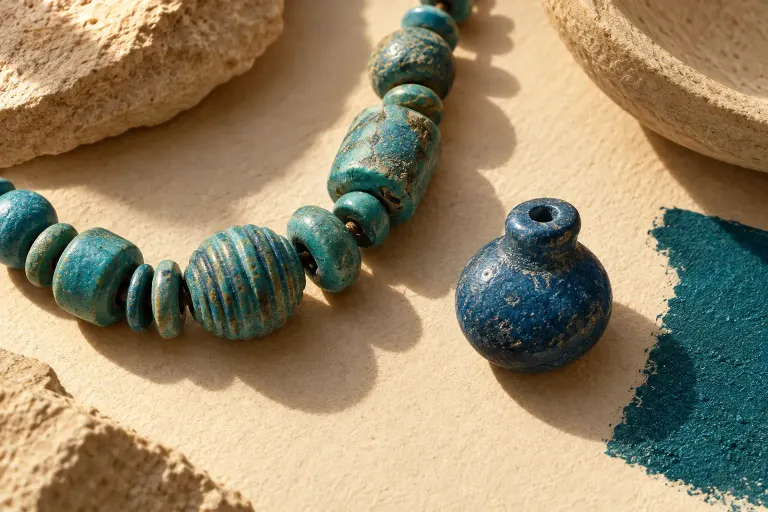
Read a reconstructed Egyptian gameboard by distinguishing surviving faience from modern additions, and keep those layers visible in your description.
Make sense of BCE date ranges on Egyptian museum labels, distinguish estimates from exact years, and avoid confusing an object’s age with its acquisition date.
An enlarged image can reveal detail while hiding scale. Learn to read an Egyptian artefact photograph alongside dimensions, views and catalogue descriptions.