
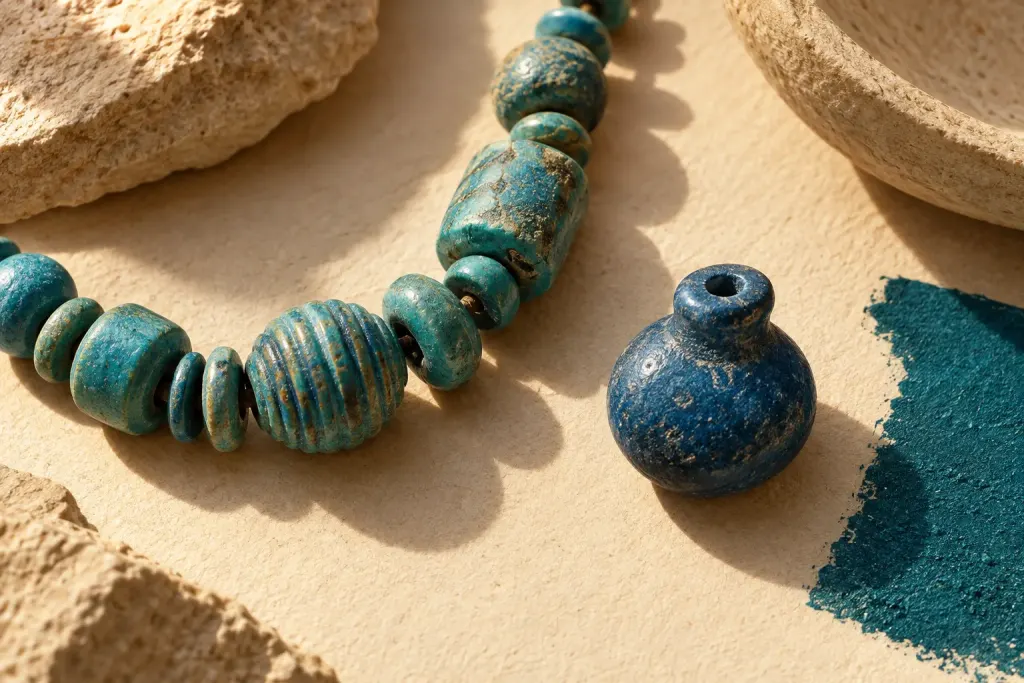
A small cosmetic container can combine materials as well as functions. The Met’s Kohl Tube and Applicator, object 30.8.150 offers a compact example: the record lists faience, gold and hematite.
Read the components individually
The catalogue dates the set approximately to 1550–1300 BCE and gives the container a height of 5.5 centimetres. The stick is listed separately at 4.5 centimetres long. Those measurements help distinguish the parts rather than treating the entire object as one undifferentiated shape.
Let the record limit the story
An applicator and container suggest a practical relationship, but the entry does not provide a complete biography of an individual user. Avoid inventing a daily routine or personal preference to make the object feel relatable.
For a study note, draw two simple outlines and place the documented measurements beside them. Keep the material list with the museum reference, and consult the institution’s images for the actual object. The site illustration is conceptual. A careful account can make the set engaging through its physical details without supplying a fictional owner.