
A ring can carry more written meaning than its size first suggests. The Walters Art Museum identifies object 42.418 as a finger ring bearing names of Amun-Re in a cartouche.
Begin with the documented object
The record describes Egyptian faience with a pale green glaze and dates the ring to 1070–940 BCE, within the Third Intermediate Period. These details connect the object to a material and historical setting without requiring you to identify the inscription unaided from a small image.
Keep inscription and ownership separate
A divine name on an object does not supply the personal name of whoever wore it. Nor does a modern acquisition history automatically describe its ancient use. Record the museum’s identification and distinguish any broader interpretation from the facts of this particular entry.
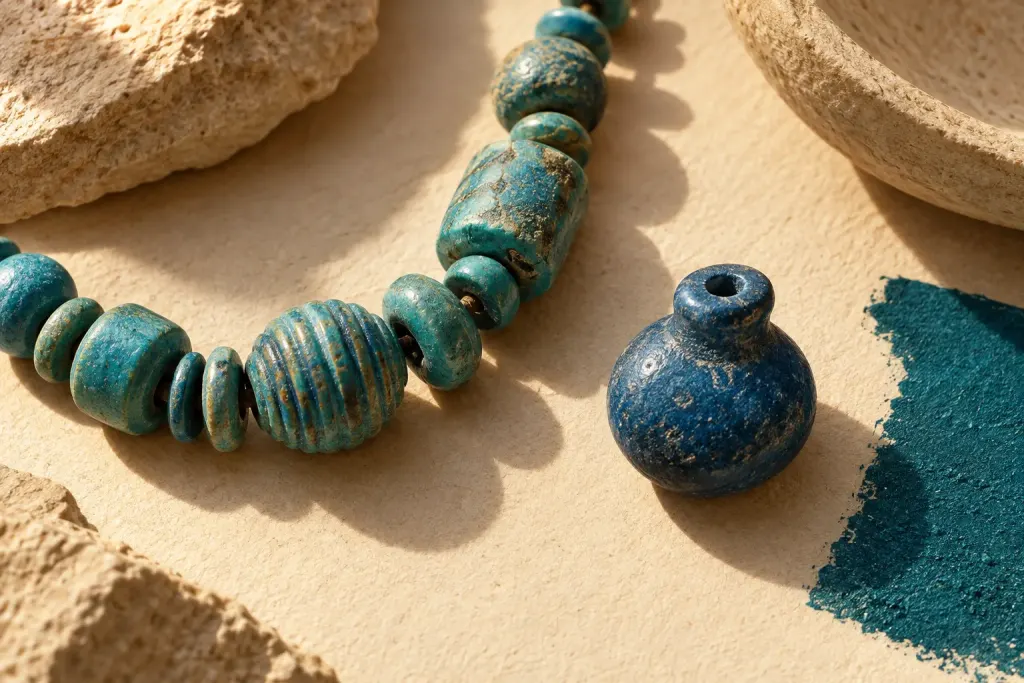
When taking notes, give the title, object number and date range before writing a response to its appearance. Use the linked museum images to study the actual ring; the accompanying site illustration is not a photograph of it. The small format invites close attention, but it does not license filling every historical gap.