
Recognisable lid shapes often dominate introductions to canopic jars. But what happens when the lid is missing? One British Museum record offers a useful reminder that surviving objects do not always match a textbook diagram.
Read what survives
The record for EA9636 describes a red-ware pottery canopic jar with faded painted representations of the Four Sons of Horus. It also records a missing lid and repairs.
Those condition details are part of the object’s present story. They explain why a photograph should not be treated as an untouched view of its original appearance.
Do not supply the missing part from memory
In your notes, leave a separate line for missing elements. A general diagram of canopic equipment can help frame a question, but it cannot independently establish the original form of this particular lid.
Likewise, retain the distinction between painted decoration that is described in the catalogue and details you can confidently distinguish in a small screen image. The catalogue may draw on examination beyond what the photograph reveals.
Build a modest object summary
Try four fields: material; surviving decoration; condition; museum identifier. This keeps the summary tied to a specific object instead of expanding into a generic account of every canopic jar.
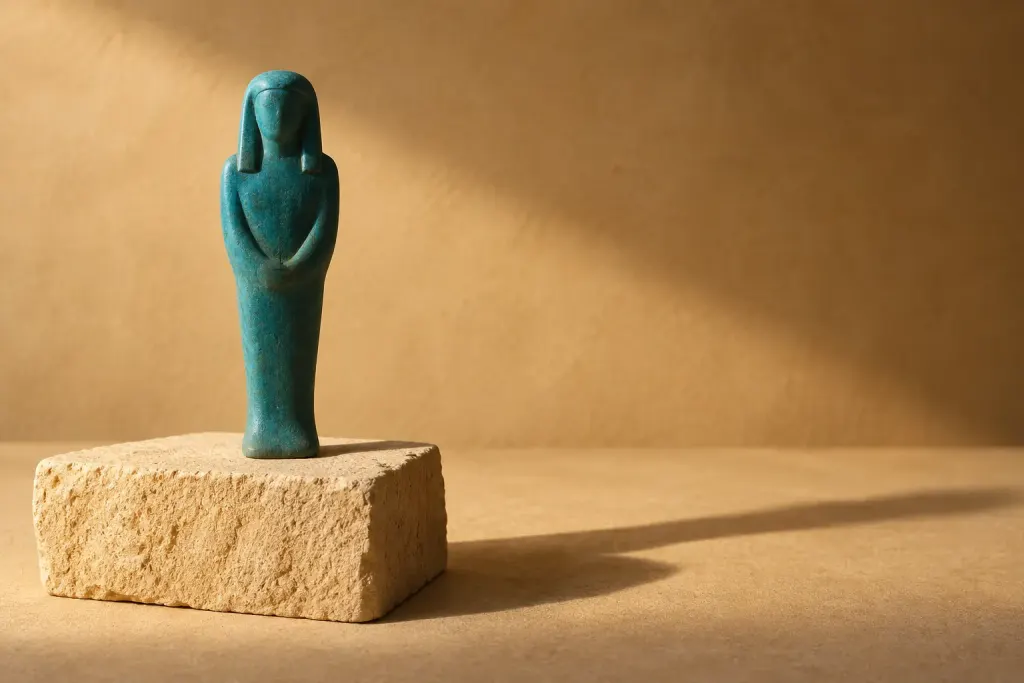
The illustration here is conceptual. Consult the linked record for the actual object. Our note on reading a small scarab’s record offers a related close-looking exercise.