
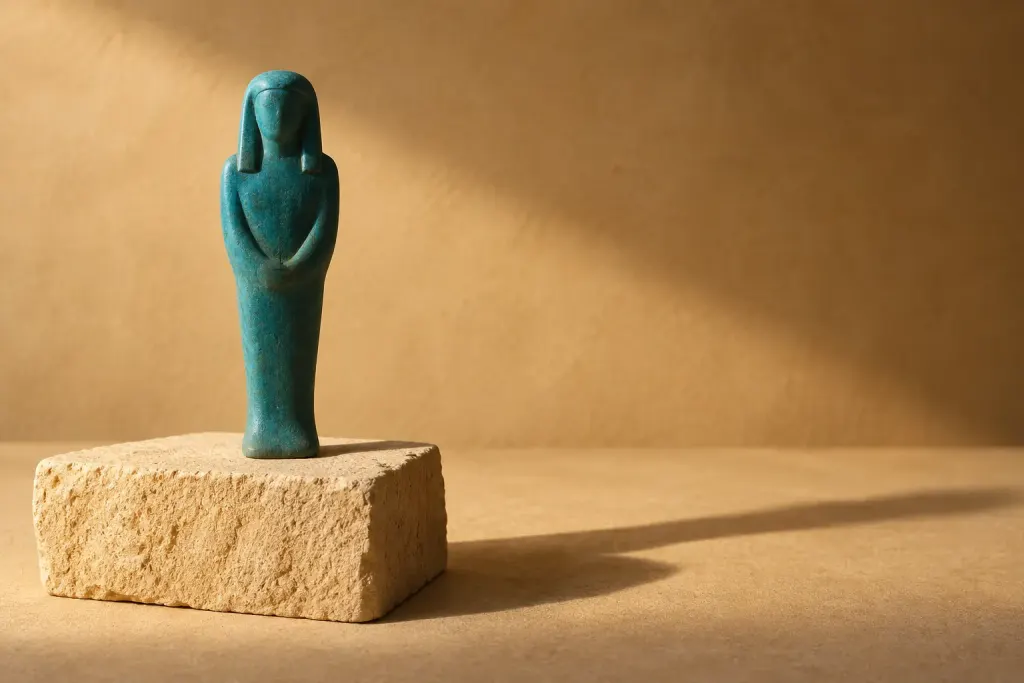
A small figure or familiar symbol seems to invite an immediate explanation. Yet identifying a shape is not the same as reconstructing how an object was used. With Egyptian amulets, the most useful questions often sit around the outline rather than inside it.
Let the record supply the starting point
The Met’s essay on ancient Egyptian amulets discusses the importance of features including form, material, colour and inscription. It also explains that identifying an amulet can become difficult when its original context is lost.
That is a reason to read the catalogue carefully. It is not a reason to invent an elaborate meaning for every small object. Check whether “amulet” is the museum’s identification, a qualified suggestion or a label supplied by someone reposting an image.
Make a question card
- What does the record say the object is?
- Which material and dimensions are listed?
- Is a findspot or original setting documented?
- Does the interpretation concern this object or a broader type?
These questions keep a general explanation from becoming a claim about a particular owner. Knowing that a form had religious significance does not, by itself, recover the thoughts of the individual who used a surviving example.
Keep gaps visible
If the findspot is unknown, write “unknown” rather than replacing it with a likely-sounding tomb scene. If the object has a broad date range, retain the range. A readable account can acknowledge uncertainty without losing its interest.
For comparison, examine one small scarab record and see how much more precise a discussion becomes when it begins with a named object. The conceptual illustration here is not evidence for an ancient object or ritual; the linked museum material provides the historical reference.