
A bag of pale mineral material is easy to overlook beside a painted coffin or a gilded object. Yet it can bring the practical work surrounding an Egyptian burial into focus. Natron belongs to that story because of what it did to moisture, not because it resembled the more spectacular objects associated with a tomb.
The Metropolitan Museum of Art records a small linen bag of natron from Tutankhamun’s embalming cache, object number 1988.437.2. Its catalogue identifies natron as a naturally occurring salt used as a desiccant in mummification. The recorded bag measures 8.5 centimetres long, making this a hand-sized object rather than the large container a screen image might suggest.
Begin with the material’s job
A desiccant removes or takes up moisture. That gives the material a practical role in preparation of the body. It does not mean that natron alone explains the whole mummification process, or that every Egyptian burial followed one unchanging procedure.
The museum’s exhibition account of Tutankhamun’s funeral places natron alongside linen, pottery and other material in the cache. Reading the group helps keep a small object connected to the activities that left it behind.
A find can be reinterpreted
The collection record explains that the material was initially misunderstood and later recognised by Herbert Winlock as connected with embalming. That history is a reminder that discovering objects and understanding their relationship are separate stages of archaeological interpretation.
For your own reading note, make two columns. In the first, list the catalogue’s direct descriptions: material, dimensions, find context and identifier. In the second, list the interpretation of the assemblage and who is credited with it. The distinction makes it easier to see which statement would change if a catalogue were revised.
Do not turn the illustration into evidence
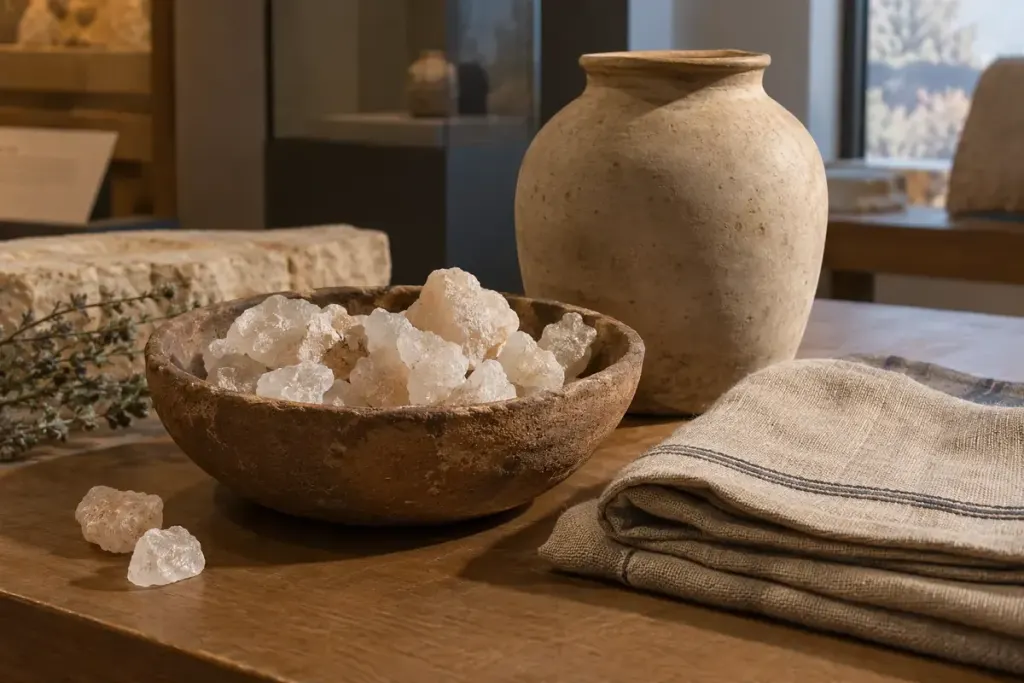
The image accompanying this article is an AI-generated educational still life of mineral crystals, linen and a jar. It is not a photograph of the Met object, a reconstruction of its exact original arrangement or evidence of the mineral’s chemical composition. Use the museum record for the documented object.
That boundary is especially useful with ancient materials. A white substance in an image cannot be identified as natron merely because the surrounding objects look Egyptian. Identification depends on the record and relevant analysis.
When browsing the collection, pause at the less decorative materials. Ask what work they performed and how they entered the surviving group. A small bag can open a precise historical question without requiring a grand claim about every burial in ancient Egypt.
AI-generated editorial illustration; not a documentary photograph.