
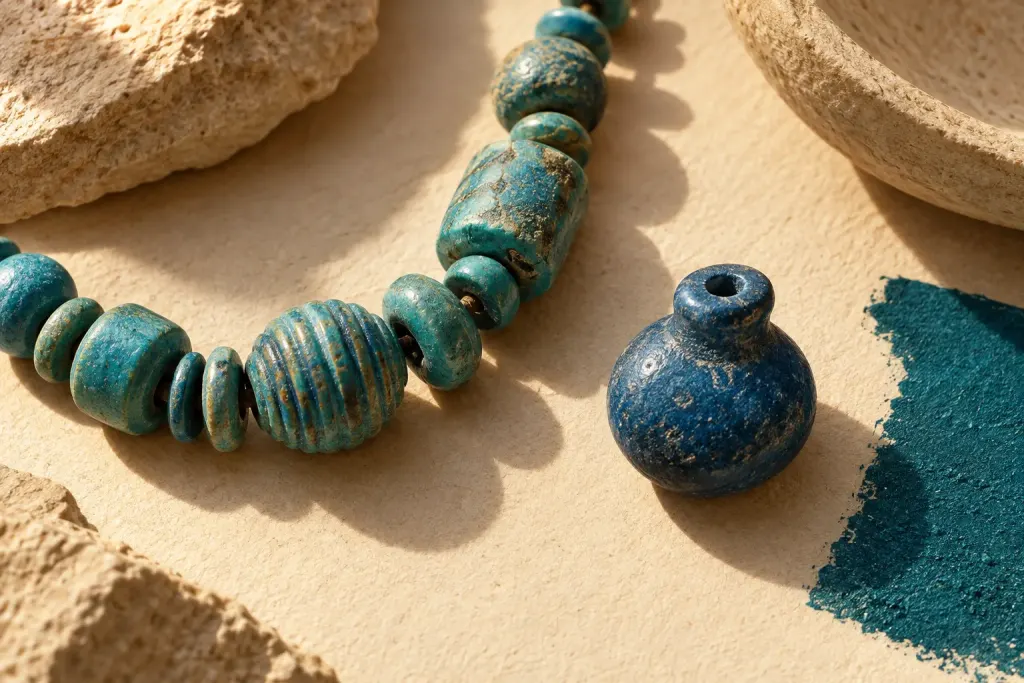
A small container can reward attention to movement as much as decoration. The Met’s ivory cosmetic box 16.10.425 has a lid designed to swivel around a peg at one end.
The museum record describes a second peg arrangement that could be secured with string. It also identifies incised decoration once filled with Egyptian blue and qualifies the proposed use for dry cosmetics rather than presenting the contents as certain.
For a reading exercise, draw the lid closed and partly open, following the catalogue images. Mark the pivot and the separate closing arrangement. Keep the drawing schematic: it is not a reconstruction suitable for making or operating an ancient object.
Then separate three questions: how the lid moves, how the container stays closed and what it held. Evidence for the first two does not automatically settle the third.
The object’s modest size makes the mechanism easy to overlook when the online image fills a screen. Add the catalogue’s measurements to your notes before imagining its use.
This approach makes a decorated box more than a surface to admire. It brings attention to a small sequence of actions—opening, accessing and securing—while retaining the museum’s uncertainty about the substances once kept inside.
Illustration selected from this site’s existing collection.