
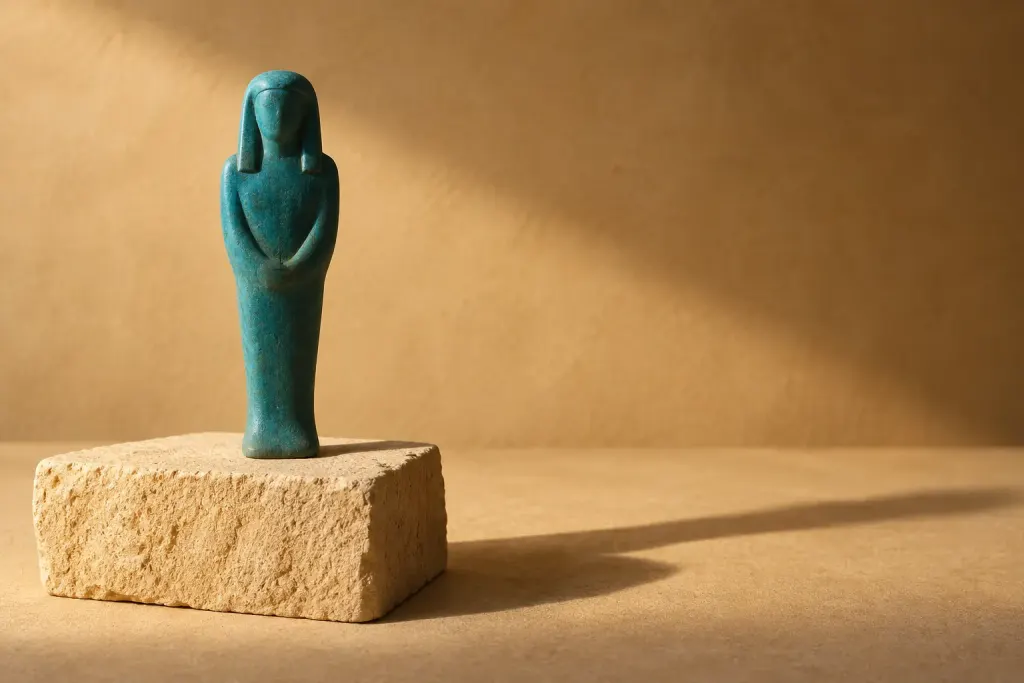
A small figure in a museum can look self-contained. Its original setting was not. It belonged to a network of objects, texts and expectations that a display case can only partly reconstruct.
Shabtis offer a useful way into that larger picture: begin with their intended role, then return to the particular object in front of you.
Describe a belief as a belief
In its entry for a faience shabti of Akhenaten, the Metropolitan Museum of Art explains that shabtis were intended to perform work for the deceased in the afterlife. This is an account of a funerary belief and the figure’s intended purpose, not a claim that the object performed work in an observable modern sense.
The same entry describes an unusual case: fragments of the king’s shabtis bear his names and titles rather than the customary shabti text. The museum uses this evidence when discussing the survival of traditional funerary practices during the Amarna period. One object therefore complicates a simple story rather than serving as a universal template.
Keep the specific example in view
When you move from an introductory explanation to a collection entry, make a two-column note. On one side, put statements about shabtis generally. On the other, put details explicitly attached to this object. This small separation makes it harder to turn one unusual inscription into a rule for every figure.
For example, the Met object is catalogued as faience. That describes this example; it is not, by itself, an inventory of all materials used for all shabtis. Read a wider set of records before making a wider claim.
A fragment can still be informative
Try covering the descriptive paragraph and looking only at the photograph and basic catalogue fields. What survives? What cannot be seen? Now uncover the text and notice which conclusions depend on comparison with other finds.
This is an original reading exercise, not an attempt to authenticate an object. It helps distinguish the evidence visible in a photograph from the scholarship that gives a fragment context. Both matter, but they are different kinds of information.
Leave room for the next question
You do not need to settle the whole history of Egyptian burial in one visit. A useful note might simply identify a question to pursue: how does the inscription relate to the figure’s purpose, and what evidence supports that interpretation?
If the material catches your attention first, begin with our guide to Egyptian faience. If the writing draws you in, consider why hieroglyphs require more than picture matching.
Object reference: The Met, Shabti of Akhenaten, accession 66.99.37. The illustration on this page is invented and does not reproduce that object.