
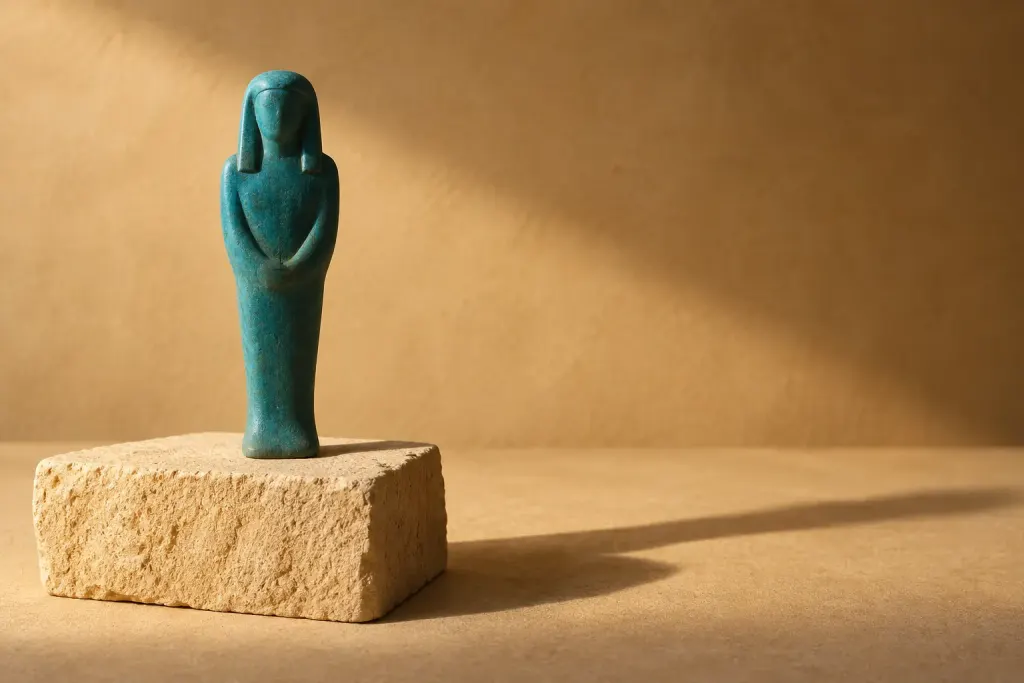
At first glance, a small faience baboon might seem to belong only to the world of animal imagery. In the Met’s object 17.194.2341, the figure is connected to a vessel interpreted as a model of a water clock.
The museum’s description explains that water could leave through an opening between the baboon’s legs. It identifies the piece as a likely temple offering to Thoth in connection with knowledge and measurement. The wording is qualified, and a summary should keep that qualification.
A model is a particular kind of evidence
This object does not give us permission to calculate the daily timekeeping accuracy of an ancient institution. It does invite a question about why a device associated with measurement would appear in an offering.
Try describing two relationships separately. First, the physical relationship between the vessel, figure, and opening. Second, the interpretation connecting the object to Thoth. The first directs your looking; the second comes from the museum’s account.
The record dates the piece broadly to the Late Period–Ptolemaic Period. Avoid converting that interval into a single invented year or attaching it to a named ceremony without evidence.
For further study, retain the object number alongside your notes so that you can distinguish this small model from other Egyptian water clocks. Its interest lies in the meeting of a measurable flow, an animal form, and a probable devotional use—not in a claim that every feature of ancient timekeeping can be recovered from it.