
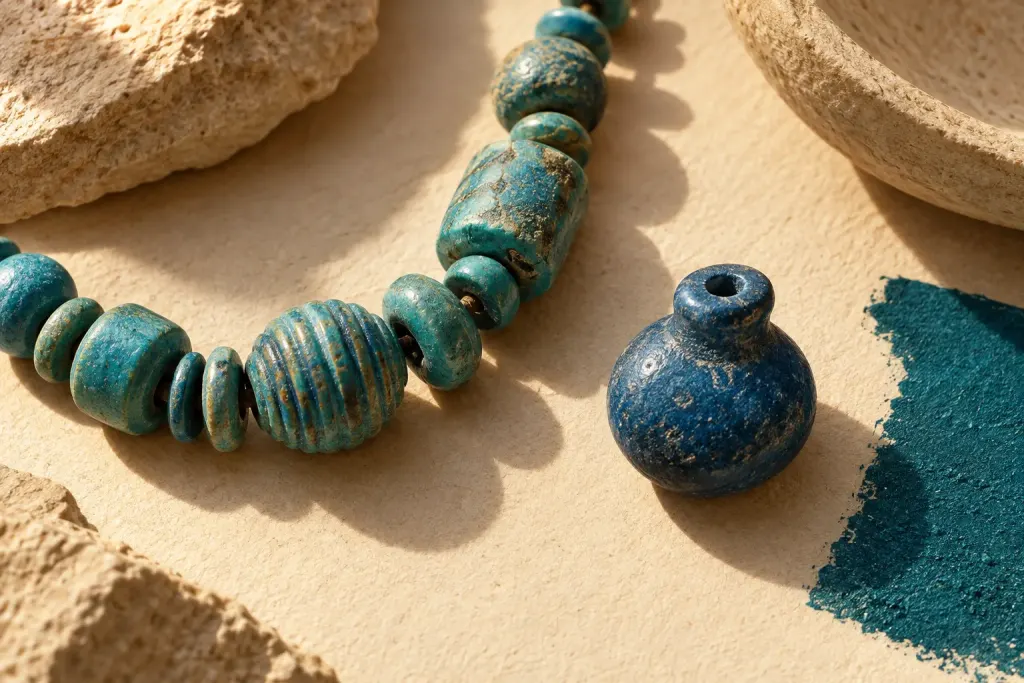
A small blue object can command a whole display case. Before calling it a gemstone or a piece of pottery, pause over the material line on its label. If it says Egyptian faience, the shine has a different story.
A surface and a core
The Metropolitan Museum of Art describes Egyptian faience as a silica-rich ceramic material with a glazed surface. It is different from the clay-based, tin-glazed earthenware also called faience in later European contexts. The familiar blue and turquoise shades often involve copper as a colourant, although Egyptian faience appears in other colours too.
The museum discusses its use in beads, figurines, vessels and inlays, and connects its luminous appearance with ideas of life and rebirth. Those associations help explain why treating the material merely as a cheaper imitation of something else can miss what people valued about it.
Give yourself a minute before reading the label
Try this original looking exercise with an online collection photograph. First describe only what you can actually see: a glossy or dull surface, rounded edges, a hole, a change of colour. Keep the description plain. “A darker patch beside the opening” is more useful than “a repair” if you do not yet know what caused it.
Then read the material and condition information. Which of your observations does it explain? Which remain unanswered? A photograph may show a chip without showing enough detail to identify every layer. That is a good place to leave a question, rather than fill the gap with a confident guess.
Compare a purpose, not just a shade
Choose two collection entries identified as faience. Compare their dimensions, shape and stated function before deciding they belong together because both are blue. A bead, an architectural inlay and a funerary figure invite different questions about use and viewing.
Record the museum, object number and link beside each note. Colour on a screen is affected by photography and display settings, so do not use a pair of thumbnails as a laboratory comparison of glaze.
Follow the material into another story
The next useful question might concern the object rather than its chemistry. Who was it made for? Where was it meant to be seen? Our introduction to shabti figures shows how a material can become part of a much larger account of belief and burial.
Further reading: The Met, Egyptian Faience: Technology and Production. The looking exercise above is an editorial suggestion, not a material identification test.