Top 25 Egypian food: The Ultimate Egyptian Food Guide
Egyptian food is one of the world’s great “everyday cuisines”: bold flavors, smart use of spices, and dishes built around beans, grains, vegetables, and grilled meats. If you’re visiting Egypt (or cooking at home), this guide gives you the top 25 dishes to prioritize—plus practical ordering tips, nutrition notes, and a simple game plan for tasting more with less guesswork.
Egypt’s cooking reflects the Nile’s agriculture (wheat, rice, fava beans, herbs) and centuries of regional influence from the Mediterranean, Levant, and Ottoman-era kitchens. The result is comfort food that’s filling, affordable, and deeply local.
What to Expect from Egyptian Food (Flavors, Staples, and Dining Culture)
Most meals start with baladi bread (pita-like flatbread) and a spread of dips, pickles, and salads. Seasoning is often garlic-forward, citrusy, and aromatic rather than “hot.” You’ll see cumin, coriander, black pepper, cinnamon, and dried mint—plus sauces like tahini and tomato-based dressings.
Common building blocks:
- Legumes: fava beans, lentils, chickpeas (high in fiber and plant protein)
- Carbs with purpose: rice, macaroni, bread—used to stretch meals and fuel long workdays
- Fresh herbs: parsley, dill, coriander, and green onions
- Street food culture: quick, filling sandwiches and plates that locals rely on daily
If you want the most “classic” experience, focus on traditional Egyptian food served in small neighborhood spots: simple menus, fast turnover, and recipes perfected over generations.
Top 25 Egypian food You Should Try
1) Ful Medames
Slow-cooked fava beans mashed and seasoned with garlic, lemon, cumin, and olive oil. It’s a breakfast staple, but also an anytime snack.
Try it with: tahini, chopped tomato, pickles, boiled egg.
Pro tip: ask for “extra lemon” if you like a brighter flavor.
2) Ta‘ameya (Egyptian Falafel)
Unlike Levantine falafel (often chickpea-based), ta‘ameya is usually made from fava beans, giving it a greener, herbier bite.
Try it as: a sandwich with salad and tahini in baladi bread.
Pro tip: best when fried to order—listen for the crunch.
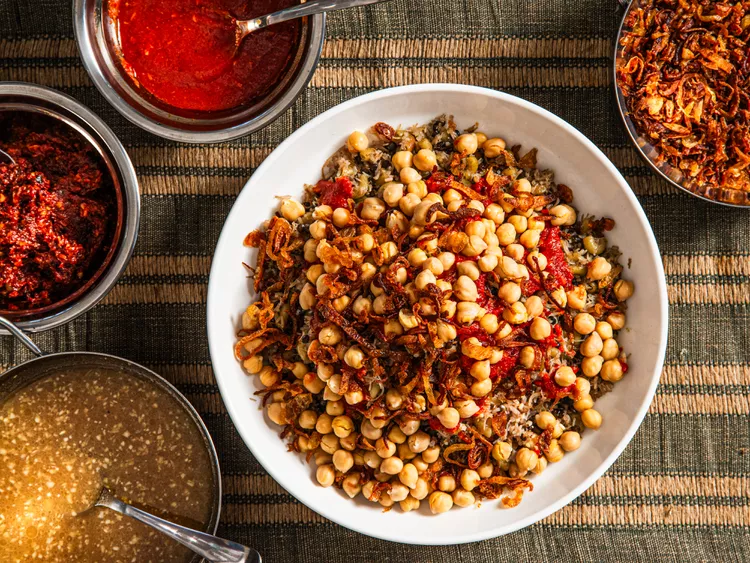
3) Koshari
Egypt’s iconic comfort bowl: rice, lentils, macaroni, chickpeas, crispy onions, and a spiced tomato sauce (sometimes with chili vinegar).
Why it works: carb + protein + acid + crunch.
Pro tip: add a little vinegar first, then chili—build heat gradually.
4) Hawawshi
A hot meat-stuffed bread pocket baked or grilled until crisp. The filling is minced meat with onion, pepper, and warm spices.
Try it with: pickles and tahini sauce.
Pro tip: eat it fresh—hawawshi is all about texture.
5) Shawarma (Egyptian Style)
Meat roasted on a vertical spit, sliced thin, and rolled into flatbread with tomato, onion, and herbs. Chicken and lamb are common.
Pro tip: ask what sauces they use; some shops add garlic sauce, others stick to tahini.
6) Kebab & Kofta
Kebab is grilled lamb chunks; kofta is spiced minced meat shaped on skewers. It’s a classic restaurant order and a social meal.
Try it with: grilled tomatoes, baladi bread, and chopped salad.
Pro tip: kofta should be juicy—dry kofta usually means overcooked.
7) Molokhia (Mulukhiyah)
A green soup/stew made from jute mallow leaves, often finished with a sizzling garlic-coriander “tasha.” Served with rice or bread, plus chicken, rabbit, or lamb.
Texture note: naturally silky and slightly viscous.
Pro tip: the garlic finish is essential—don’t skip it.
8) Fatteh (Egyptian Fatteh)
Layered comfort food: toasted bread soaked in broth, topped with rice and meat, then finished with garlicky tomato sauce (often with vinegar).
When you’ll see it: family gatherings and holidays.
Pro tip: great “one-plate” meal—no sides needed.
9) Mahshi
Vegetables stuffed with herbed rice—commonly zucchini, peppers, eggplant, cabbage leaves, or grape leaves. Some versions include minced meat.
Flavor: dill and parsley shine here.
Pro tip: ask for “mahshi warak enab” if you want stuffed grape leaves.
10) Roz Bel Laban
Cold rice pudding made with milk and sugar, sometimes topped with nuts.
Why locals love it: simple, comforting, and not overly heavy.
Pro tip: choose a dairy shop with high turnover for the freshest batch.
11) Umm Ali
Egypt’s beloved baked dessert: layers of pastry soaked in sweet milk, loaded with nuts and raisins, served warm.
Think: rich, toasty, creamy.
Pro tip: best when the top is browned and crisp at the edges.
12) Basbousa
Semolina cake soaked in syrup, often topped with almonds or cream. The Egyptian style is usually thinner and very moist.
Pro tip: look for even syrup absorption—dry corners are a red flag.
13) Kunafa (Kanafeh)
Shredded pastry baked with butter and a soft cheese or cream filling, then soaked in syrup.
Texture goal: crisp outside, soft center.
Pro tip: eat it warm for peak contrast.
14) Baklava (Egyptian Assortment)
Syrup-drenched filo pastries filled with nuts. In Egypt, you’ll often find a wide tray selection in pastry shops.
Pro tip: buy mixed pieces; baklava varies a lot by nut type and syrup level.
15) Mahalabia (Mahalabiya)
A light milk pudding thickened with rice flour or cornstarch, typically flavored with rose or orange blossom and topped with nuts or cinnamon.
Pro tip: if it’s overly gelatinous, it sat too long—fresh is smoother.
16) Feteer Meshaltet
Flaky layered pastry-bread that can be savory (cheese, minced meat) or sweet (honey, sugar). Often served with samna (ghee).
Pro tip: tear and dip—this is a hands-on dish by design.
17) Baba Ghanoush
Roasted eggplant blended with tahini, lemon, garlic, and olive oil. Creamy, smoky, and made for dipping.
Try it with: baladi bread and a side of pickles.
Pro tip: more smoke = better eggplant roasting.
18) Tahini Salad (Salatet Tahina)
A tangy, creamy sesame sauce mixed with lemon, garlic, and sometimes yogurt or chopped herbs.
Where it shines: with grilled meats, shawarma, and fried fish.
Pro tip: balance it—too thick means it needs lemon/water.
19) Dukkah
A crunchy mix of toasted nuts/seeds and spices (often hazelnut or peanut, sesame, coriander, cumin).
How it’s eaten: dip bread in olive oil, then in dukkah.
Pro tip: keep it dry and sealed—freshness matters.
20) Alexandrian Liver (Kebda Eskandarani)
Fast-cooked liver chopped and sautéed with garlic, hot pepper, and sometimes vinegar, served in a sandwich with tahini and pickles.
Pro tip: it should be tender, not chewy—high heat, quick cook.
21) Sausage (Sogoq/Sujuk-Style in Egypt)
Spiced sausage cooked with peppers, onions, and tomato—street stalls and home kitchens both do versions.
Try it as: a sandwich or a plate with eggs.
Pro tip: ask how spicy it is; heat levels vary wildly.
22) Sayadiya Fish
A coastal classic: white fish cooked with spiced rice (often browned onion base), sometimes finished in the oven. Common in Alexandria and canal cities.
Pro tip: great with lemon and a simple salad—don’t over-sauce it.
23) Fried Fish with Samak “Style Plates”
Egypt has countless fish plates—fried mullet, sea bass, or bream—served with tahini, rice, and pickles.
Pro tip: choose busy seafood spots; turnover is your best freshness signal.
24) Hamam Mahshi (Stuffed Pigeon)
A celebratory dish: pigeon stuffed with seasoned rice or freekeh (green wheat), then grilled or baked.
Pro tip: freekeh stuffing adds a nutty flavor and better texture than plain rice.
25) Baked Sweet Potato
A winter street favorite: sweet potatoes roasted in a wood-fired oven and served split open. Modern carts add toppings like nuts or sauce.
Pro tip: the best ones have caramelized edges and soft centers.
Key Insights: Benefits, Pros & Cons (What an Expert Watches For)
Benefits (Why this cuisine is smart eating)
Many Egyptian food staples are naturally nutrient-dense:
- Legume-based meals (ful, lentils in koshari) support fullness due to fiber and protein.
- Herbs and garlic add flavor without needing heavy sauces.
- Grilling and stewing are common cooking methods, which can be lighter than deep-frying (though street food does plenty of frying, too).
Pros
- Affordable variety: you can eat very well on a modest budget.
- Balanced plates are easy: add salad + tahini + grilled protein.
- Vegetarian-friendly options: koshari, ta‘ameya, many mahshi varieties.
Cons / Watch-outs
- Portion size: carb portions can be large (bread + rice + pasta in one meal is normal).
- Sodium: pickles, sauces, and some street foods can be salty.
- Food allergies: sesame (tahini/dukkah), nuts (desserts), dairy (puddings) are common.
- Food safety: quality varies—choose busy stalls and freshly cooked items.
If you’re trying traditional Egyptian food for the first time, start with ful, ta‘ameya, koshari, and grilled meats—then branch into molokhia and stuffed pigeon once you’re comfortable.
Practical Tips: How to Eat Egyptian Food Like a Local (Without Regret)
Step-by-step tasting strategy
- Start with breakfast foods (ful + ta‘ameya). They’re widely available and usually gentle on the stomach.
- Pick one “heavy” dish per day (koshari or feteer or fatta).
- Add something fresh at each meal:
- chopped tomato/cucumber salad
- arugula
- lemon wedges
- Use sauces as tools:
- tahini for richness
- vinegar/chili for lift and heat
- lemon for brightness
- Save desserts for afternoons/evenings when pastry shops are freshest.
Smart ordering phrases (easy wins)
- “Bidoon shatta” = without chili (if you’re heat-shy)
- “Zawwed limoon” = add more lemon
- “Sandwich” vs “Taba’” = sandwich vs plate
Where to find the best versions
- Street carts: ful, ta‘ameya, kebda, sweet potato (best when crowded)
- Dedicated shops: koshari restaurants often do one thing extremely well
- Grill restaurants: kebab/kofta and mixed grills
- Pastry shops: kunafa, basbousa, baklava, Umm Ali
Expert Recommendation: A One-Day “Best Of” Tasting Plan
If you only have one day to understand Egyptian food, this sequence gives you maximum range with minimal overload:
- Breakfast: Ful medames + ta‘ameya sandwich (share one if you’re not starving).
- Lunch: Koshari (small size) + extra fried onions + vinegar on the side.
- Afternoon snack: A dairy shop dessert—roz bel laban or mahalabia.
- Dinner: Kebab & kofta with salad and tahini (skip extra bread if lunch was big).
- Late dessert: Warm kunafa or a small piece of basbousa.
This arc hits legumes, street food, comfort carbs, grills, and sweets—basically the full personality of Egypt in edible form.
Conclusion
From ful and ta‘ameya breakfasts to koshari comfort bowls, coastal fish, and syrupy desserts, Egyptian food rewards curious eaters with huge flavor and real culinary history. Use the tasting plan, choose busy spots, and balance rich dishes with fresh salad and lemon—you’ll eat like a local and remember it like a traveler.
Suggested Image Alt Text (copy/paste ideas)
- “Ful medames with olive oil, lemon, and baladi bread in Cairo”
- “Taameya Egyptian falafel sandwich with tahini and salad”
- “Koshari bowl with lentils, pasta, fried onions, and tomato sauce”
- “Egyptian kofta and kebab skewers on a charcoal grill”
- “Molokhia green soup with garlic coriander tasha”
- “Mahshi stuffed zucchini and peppers with herbed rice”
- “Feteer meshaltet flaky Egyptian pastry bread with honey”
- “Alexandrian liver kebda sandwich with pickles”
- “Sayadiya fish with spiced rice Egyptian coastal recipe”
- “Kunafa kanafeh dessert with syrup and pistachios”
- “Umm Ali Egyptian bread pudding served warm”
- “Basbousa semolina cake soaked in syrup”
- “Wood-fired baked sweet potato street cart in Egypt”
FAQ (Schema-ready, 5 questions)
FAQ (Visible)
1) What is the most popular Egyptian street food?
Ful medames, ta‘ameya, and koshari are among the most common street foods because they’re filling, affordable, and widely available.
2) Is Egyptian food spicy?
Usually it’s more garlicky, tangy, and aromatic than spicy. Heat is often optional (added via chili sauce or chili-vinegar).
3) What should first-time visitors try first?
Start with ful, ta‘ameya, koshari, and kebab/kofta. They’re easy to enjoy and represent core flavors.
4) What are good vegetarian Egyptian dishes?
Koshari, ta‘ameya, ful medames, baba ghanoush, many mahshi varieties, and dukkah with bread and olive oil.
5) How can I eat Egyptian street food safely?
Choose busy vendors, prefer freshly cooked items, avoid anything sitting uncovered, and use bottled water if you have a sensitive stomach.
json
{
  "@context": "https://schema.org",
  "@type": "FAQPage",
  "mainEntity": [
    {
      "@type": "Question",
      "name": "What is the most popular Egyptian street food?",
      "acceptedAnswer": {
        "@type": "Answer",
        "text": "Ful medames, ta‘ameya, and koshari are among the most common Egyptian street foods because they’re filling, affordable, and widely available."
      }
    },
    {
      "@type": "Question",
      "name": "Is Egyptian food spicy?",
      "acceptedAnswer": {
        "@type": "Answer",
        "text": "Egyptian food is usually more garlicky, tangy, and aromatic than spicy. Heat is often optional and added via chili sauce or chili-vinegar."
      }
    },
    {
      "@type": "Question",
      "name": "What should first-time visitors try first in Egypt?",
      "acceptedAnswer": {
        "@type": "Answer",
        "text": "Start with ful, ta‘ameya, koshari, and kebab/kofta. They’re approachable, widely available, and represent core Egyptian flavors."
      }
    },
    {
      "@type": "Question",
      "name": "What are good vegetarian Egyptian dishes?",
      "acceptedAnswer": {
        "@type": "Answer",
        "text": "Good vegetarian options include koshari, ta‘ameya, ful medames, baba ghanoush, many mahshi varieties, and dukkah with bread and olive oil."
      }
    },
    {
      "@type": "Question",
      "name": "How can I eat Egyptian street food safely?",
      "acceptedAnswer": {
        "@type": "Answer",
        "text": "Choose busy vendors, prefer freshly cooked items, avoid food sitting uncovered, and use bottled water if you have a sensitive stomach."
      }
    }
  ]
}